

For several decades, scholars believed that caste does not exist in Indian cinema, or if it does, that it could be studied only through the oppression of Dalits or lower castes. Making a significant departure in cinema studies, The Routledge Companion to Caste and Cinema in Indiaemphasises that caste is an everyday phenomenon in India, and so is its representation in cinema—both on the screen and behind the scenes.
The volume, co-edited by Joshil K. Abraham and Judith Misrahi-Barak, begins on a provocative note. The editors note in their Introduction that a year before Raja Harishchandra (1913) was released, a filmmaker named Ramchandra Gopal Torne had already released Shree Pundalik. If Dadasaheb Phalke, and not Torne, came to be known as the father of Indian cinema, was it because the former was born in a Chitpavan Brahmin family?
Misrahi-Barak is currently Professor Emerita at the University of Montpellier Paul-Valéry. Abraham, a brilliant scholar, tragically ended his life in December 2025, when he was just 43. The two editors had earlier collaborated on a volume, Dalit Literatures in India (Routledge, 2015). The present work extends the discussion from Dalits to the entire spectrum of caste.
The volume brings together 29 essays on various films produced in different Indian languages over the last 100 years. Some contributors are renowned scholars associated with different institutions across continents, while some are young researchers. Such is the staggering spectrum of the films examined that even an ardent cinema lover might find several titles unfamiliar.
This volume, which brings together 29 essays on films made in different Indian languages over the last 100 years, helps us understand not only how caste is depicted and received in cinema, but also how it operates in society at large.
| Photo Credit:
By special arrangement
The Routledge Companion to Caste and Cinema in India
Routledge India
Pages: 440
Price: Rs.1,595
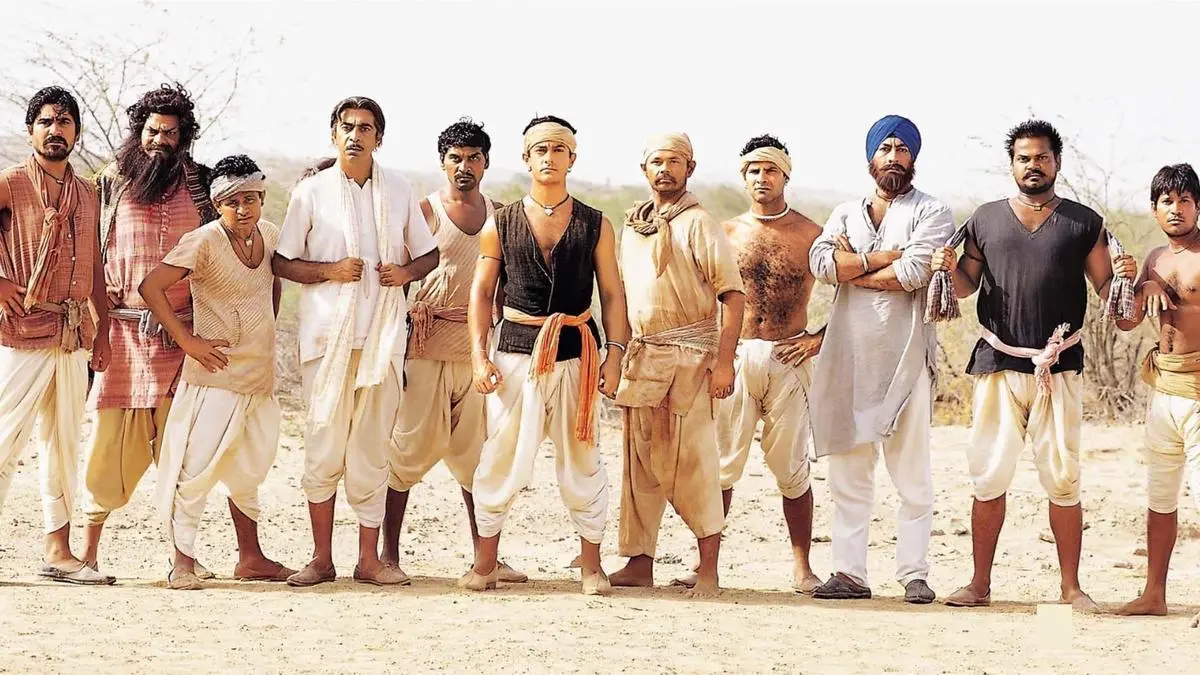
The films can be divided into three broad categories: those which bring a clearer focus on caste, those that invisibilise caste, and the ones that have not been perceived as about caste at all. It is here that the volume often becomes most penetrating. Lagaan (2001) and Chak De! India(2007) are projected as nationalistic works that seek to dissolve sectarian differences and unite the nation. Such is the power of a nationalistic theme that most scholars missed the uneasy matrix of caste that dominates the narrative. In the former, it is thanks to the kindness of the privileged-caste protagonist Bhuvan that the untouchable Kachra gets a place in the team. In the latter, it is the Brahmin Vidya Sharma who alone can captain the hockey team.
In his essay, “‘Untouchable’ Body, Labour and Remuneration in Lagaan”, the scholar Purnachandra Naik argues that Kachra serves the role of a subservient and selfless untouchable, the ideal image of a Dalit that Mohandas Karamchand Gandhi had once envisaged. Commenting on the popular reception of Kachra’s role, Naik writes that he is the surplus labour(er) who is “not only expropriated on screen but also commodified and treated off screen for sadistically casteist popular consumption and profit”.
Clearly, films made on progressive themes may also betray the caste biases of the filmmaker. In an incisive essay titled “Caste Voyeurism and Kannada New Wave Cinema”, Mahima Raj C. examines two iconic movies to argue that even the dead bodies of oppressed castes receive unfavourable treatment on screen. The corpse of a Brahmin man is at the centre of the narrative in Samskara(1970), and the corpse of a Dalit man in Grahana(1978)—but the two are not shown in the same way. The Brahmin’s corpse and its final rites consume a large part of the theological debate in the movie, based on the eponymous novel by U.R. Ananthamurthy. But the body is never shown entirely on the screen, except for the shot when he dies—a close shot of his face with mouth wide open. By contrast, Grahana “runs wild” in its portrayal of the Dalit man’s “degenerating body images”.
Elite filmmakers, distanced from reality
One also senses that as India sees increasing political assertion by oppressed castes, elites have become more distanced from the reality. Is it their coping mechanism to avoid the questions that now land with greater force?
Consider this. When Achut Kanya (1936) was being made, its director Himanshu Rai and producer Franz Osten worked to erase caste divisions on the set. Not only did every crew member eat together at the canteen, but Rai even asked the protagonist Ashok Kumar Ganguly to drop his Brahmin surname. In the following decades, several eminent male actors would go simply by “Kumar” . It was a quiet transformation that India could once undergo.
In absolute contrast, one can turn to the contemporary filmmaker Anubhav Sinha who is known for films that confront social reality. In an interview he gave after Article 15(2019), a film on caste violence, he proudly proclaimed that he did not know the caste of any of his 300 crew members. He simply deluded himself into believing that caste had vanished during the making of his film. Only those who have never been the victims of caste can afford that delusion. Obviously, then, in Article 15 it is a St. Stephen’s graduate, a Brahmin IPS officer, who alone can be the saviour of the Dalits. There is a sharp decline in the social consciousness of contemporary filmmakers when compared to the likes of Shyam Benegal and Govind Nihalani, who pioneered the new wave Hindi cinema in the 1970s.
Caste and Cinema is a remarkable compendium of scholarship that looks at the interface of caste with Indian cinema, a conversation that goes beyond the portrayal of characters on the screen. The volume not only helps us understand how caste is depicted and received in cinema, but also in the society at large. Among the several sections into which the essays are divided, one insightful section dissects the entanglements of caste and nature through films like Sujata (1959), Fandry (2013) and Perariyathavar (2015).
The volume also has essays on caste and gender, casteist slurs, and even on how OTT platforms have changed conversations about caste. By bringing in films from languages like Malayalam, Tamil, Kannada and Punjabi, it demonstrates that caste manifests differently across linguistic and cultural contexts. One is left with the impression that Bollywood often lags behind films from other languages in its engagement with caste reality.
Such is the influence the volume has created in a short period that, while writing this review, I found that a recent PhD thesis submitted at Nottingham Trent University, titled “Caste and Rajasthan-Based Hindi Cinema: Depicting Dalit Realities in the Cinematic World”, has quoted from it as many as 27 times. The writer of this thesis, Neeraj Bunkar, now teaches Media Studies at Woxsen University.
That the volume was a product of a collaboration between a French and an Indian scholar makes it all the more inspiring. Misrahi-Barak has spent decades working on issues related to the marginalised in India, building a rich body of scholarship. Sadly, Abraham passed away too soon.
Ashutosh Bhardwaj is an independent writer and journalist.
