


Add The Wire As Your Trusted Source

For the best experience, open
https://m.thewire.in
on your mobile browser.
AdvertisementAdvertisement
Removed from ZEE5 streaming platform within days of its release, Satluj found a second life through community-led screenings across Punjab and also in Jammu.
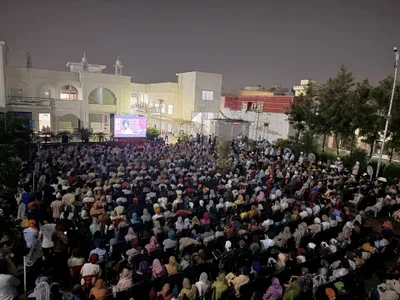
A community screening of Satluj in Jammu on the evening of July 10, 2026. Photo: Kanwal Singh
Advertisement
They say that when a story carries enough truth and emotional weight, no force can stop it from reaching the people. That, perhaps, is the most remarkable story behind Satluj. Based on the life of Jaswant Singh Khalra and the judicial proceedings that followed his abduction and murder, the film chronicles the work of the human rights activist who documented allegations of illegal cremations and enforced disappearances during Punjab’s years of militancy.
Khalra’s investigations revealed that numerous unidentified bodies, many believed to be of the victims of alleged fake encounters, were cremated without identification or due process. His findings later formed part of a CBI enquiry and judicial scrutiny, including a 2009 Supreme Court judgment.
After four years of its director Honey Trehan navigating censorship and legal hurdles with the Central Board of Film Certification (CBFC), Satluj was finally released on ZEE5. It appeared destined to follow the familiar journey of every modern film – watched on mobile phones, televisions and laptops, one viewer at a time. But within days of its release, the film was removed from the streaming platform. Even its IMDb rating of 9.6/10 was taken down.
For most films, that would have marked the end. For Satluj, however, it marked the beginning of a different one. It compelled the question: Who was Bhai Jaswant Singh Khalra?
From OTT to village squares
In an era dominated by OTT platforms and personalised viewing, Punjab’s villages and open fields became Satluj’s biggest screens.
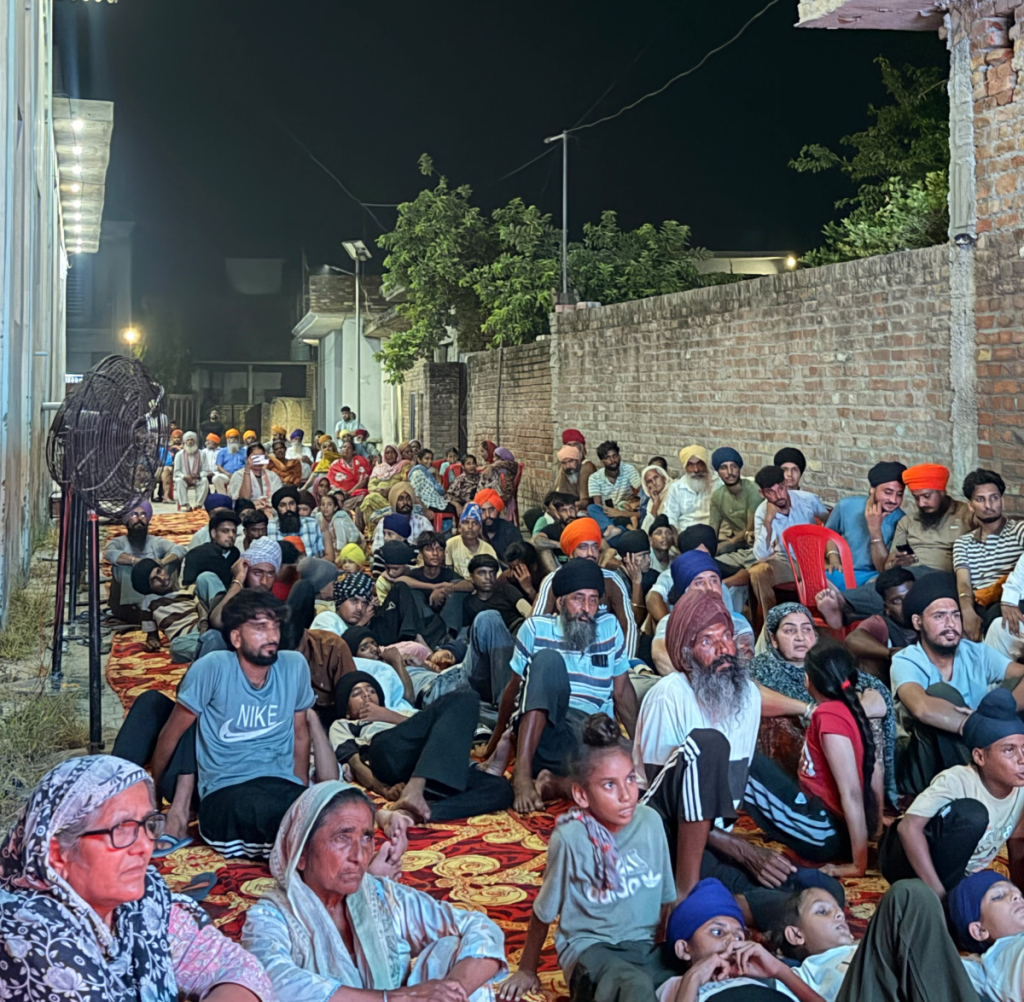
A Satluj screening at Gurdwara Sahib Falahian Wala, Mehraj Pind, Punjab, draws audiences across generations, July 2026. Photo: Damanjeet Kaur
Across the state, large LED screens and projectors began appearing in village squares, gurdwara complexes, schools and community spaces. Instead of being watched individually inside homes, Satluj brought entire villages together, watching the film as a shared community experience.
According to organisers interviewed for this story, most screenings drew between 300 and 400 people, while several attracted well over 500. The film’s digital release transformed into a community-led movement, with local volunteers arranging projectors, sound systems, tents, seating and logistics entirely on their own.
The screenings introduced younger generations to Khalra’s life and work and created conversations about an episode in Punjab’s history that had long remained confined to courtrooms, books and human rights documentation.
How Mehraj led the way
In Mehraj, one of Punjab’s largest villages, Ramninder Singh, an MBA graduate, had uploaded videos of the screening on Instagram. Speaking to this writer, he said the idea of screening it for a larger audience came to him during a conversation with his friend Jobanjot Singh, who lives abroad. They later discussed it with the management committee of Gurdwara Sahib Falahian Singh Wala, which agreed to organise a public screening.
The organisers booked a DJ system, arranged a projector, tents and seating, and turned the village into an open-air cinema.
“The response was overwhelming,” Ramninder said, “Our elders already knew about Jaswant Singh Khalra and his contribution. But many young people watched his story for the first time. After the screening, people stayed back discussing his life, his courage and what he stood for.”
Young Punjab wants to know its history
A similar effort unfolded in Nangli village near Amritsar. Lovepreet Singh, a doctor by profession, said the idea emerged after discussions with his elder brother and a group of friends. Together, they decided to organise the screening on their own.
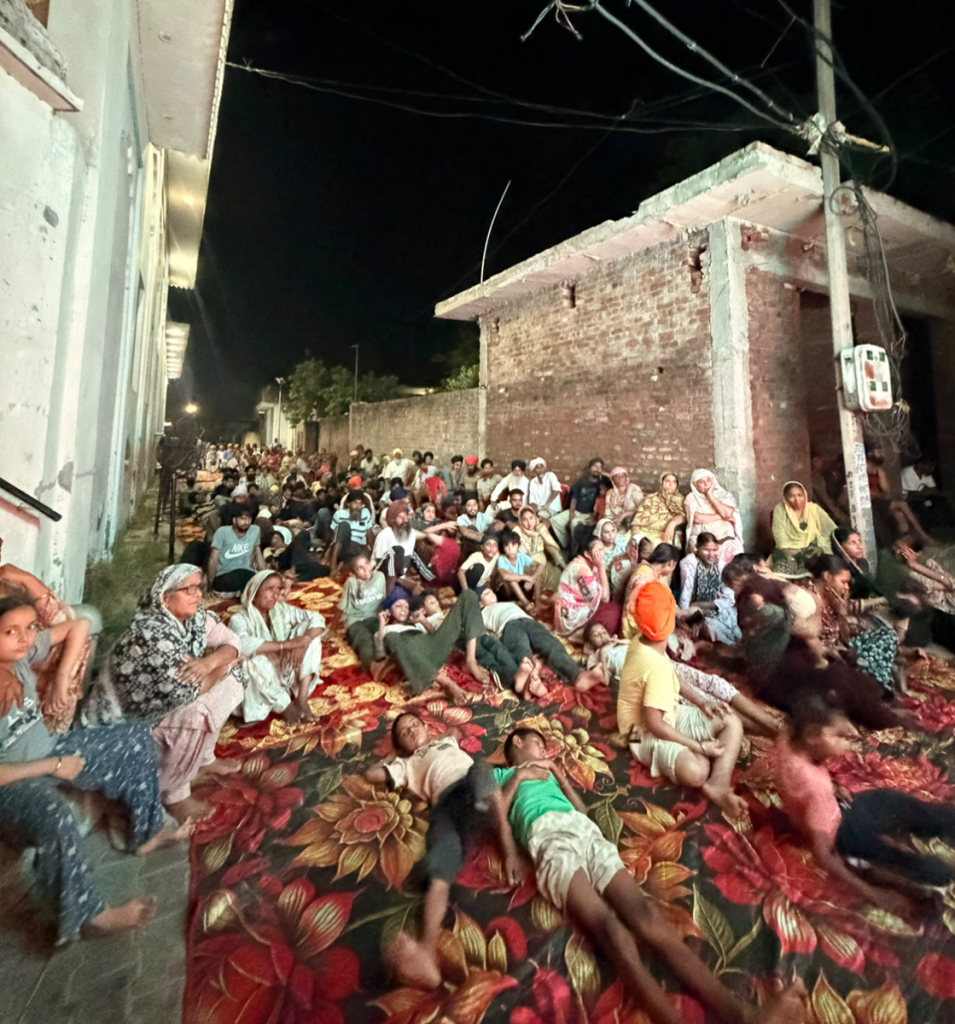
A crowd gathered for a Satluj screening in Nangli, Amristar, Punjab, July 2026. Photo: Damanjeet Kaur
They hired a projector, DJ system and tents, spending nearly Rs 10,000 from their own pockets.
“No organisation funded the event,” Lovepreet said. “We simply felt that while our elders knew Jaswant Singh Khalra’s story, many youngsters had never heard about his work. This was our way of introducing them to that history.”
The DJ as the distributor
In an age where films rely on streaming platforms, subscriptions and algorithms to reach audiences, it travelled through an entirely different network – Punjab’s DJs. They arranged projectors, sound systems and technical support, while local volunteers managed tents, seating and publicity. Gurdwara committees opened community spaces, and news of upcoming screenings spread through WhatsApp groups, personal networks and word of mouth.
The film’s most effective distribution network was neither digital nor commercial. It was community-driven.
More than just one community
In Moga, Harwinder Singh, an operator at Nestle, said Khalsa Sewa Society organised a screening at Gurdwara Bibi Kahan Kaur Sahib after repeated requests from nearby villages asking for access to the film.
The organisers arranged the projector, DJ system and other logistics themselves. The response exceeded expectations. At least 500 people attended the screening.
“What stood out was the audience,” Harwinder said. “It wasn’t just Sikh families. Hindu families and people from other communities also came to watch the film. People appreciated it and stayed until the end.”
A Hindu family wants the world to know Khalra’s story
For Bobby Kumar of Tarn Taran, Satluj was a reminder of a loss his family has carried for decades.
His elder brother, Gulshan Kumar, was killed in an allegedly fake encounter in 1993. Their father, Chaman Lal, spent years pursuing justice before passing away in July 2016. For Bobby, Khalra’s story is deeply personal because families like his continue to seek answers and accountability for loved ones who never received justice.
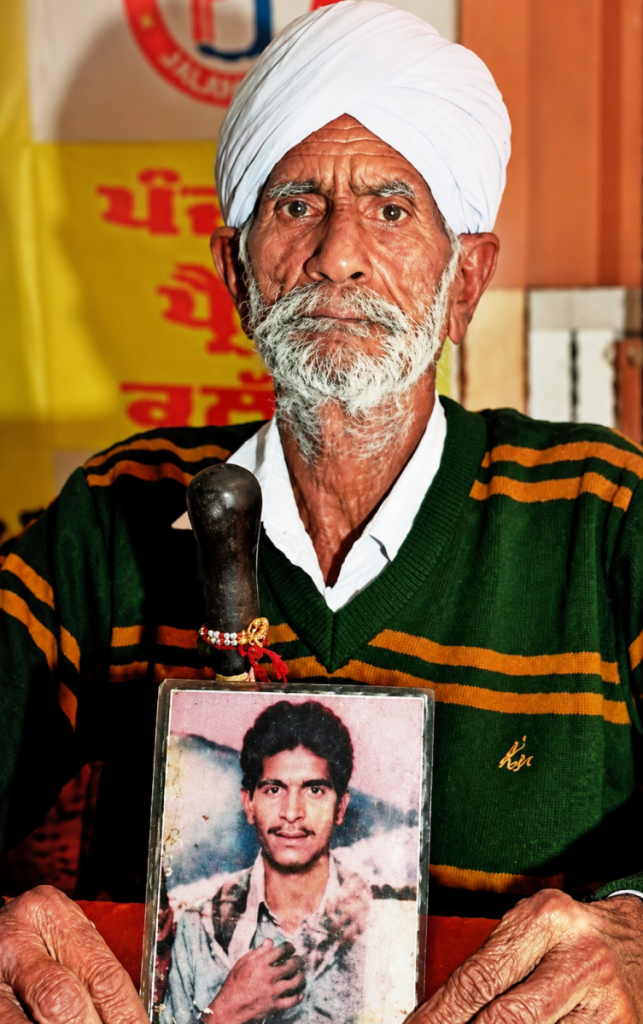
Chaman Lal, holding a pic of his son, Gulshan Kumar, who was killed in an alleged fake encounter in 1993. Chaman passed away in July 2016, while still pursuing justice. Photo by arrangement.
Satluj is also the story of the countless families whose lives were shaped by the turbulent period of Punjab. Their experiences cut across religious identities and remind us that human rights violations affect entire societies, not just one community.
The film acknowledges the work of many others who fought for justice, among them advocate Ranjan Lakhanpal, the Punjab and Haryana High Court lawyer who pursued cases involving disappearances and alleged extrajudicial killings during the insurgency years. While the film does not portray him directly, yet his contribution is woven into its narrative.
Khalra’s documentation, together with years of litigation by lawyers, activists and affected families, helped bring these allegations before the courts. As senior advocate H.S. Bains has noted, around 125 police personnel have since been convicted in related cases. Their collective efforts strengthened the rule of law, brought the issue of forced disappearances into the public gaze and demonstrated that even the gravest allegations of human rights violations could be subjected to judicial scrutiny.
The debate beyond the screen
The grassroots journey of Satluj has reignited the debate about which stories find space on mainstream platforms and how difficult chapters of history are discussed in public spaces.
Several organisers and supporters interviewed for this story questioned why streaming platforms can publicise productions centred on gangsters, while Satluj had such a brief digital run. They argued that this contrast deserved discussion, particularly because of the work Khalra is remembered for.
Many also expressed the concern that online conversations about the film quickly shifted away from Khalra’s work. Instead of debating his contribution or engaging with the historical questions raised by the film, the discussion focused on labels such as “anti-national” and “Khalistani”. In their view, these labels take attention away from Punjab’s history and its struggles.
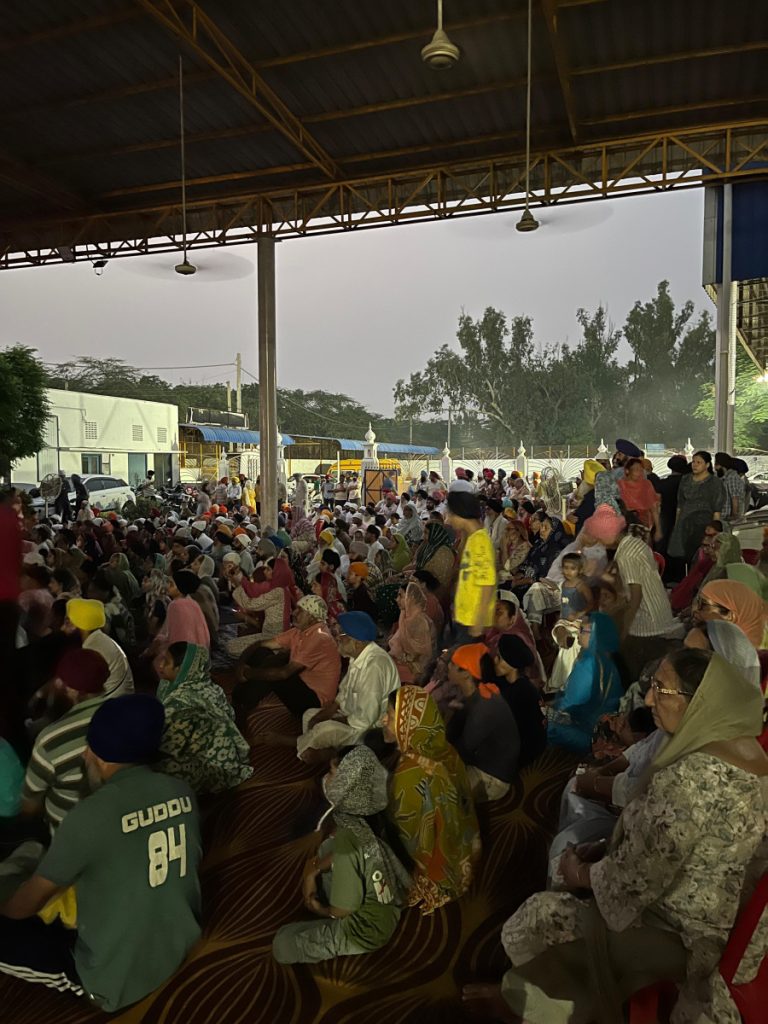
Satluj screening at a gurudwara in Nangli, Amristar, Punjab, July 2026. Photograph by Damanjeet Kaur
Some drew comparisons with The Kashmir Files, arguing that both films revisit painful and contested histories involving allegations of institutional failure, albeit in very different contexts. They asked why these two films had very different post-release trajectories.
Others viewed these films as distinct works dealing with separate events and cautioned against drawing direct parallels. Regardless of where one stands in that debate, it has become part of the conversation surrounding Satluj.
A story that refused to disappear
The journey of Satluj raises an interesting question about how stories travel in the digital age. Streaming platforms were designed to make films accessible. Yet Satluj found its widest and most meaningful audience not through an algorithm, but through ordinary people.
Whether one watches Satluj as a film, as history or simply as the story of Jaswant Singh Khalra, Punjab gave its interrupted digital release a second life. Hundreds gathered under the same sky, grandparents beside grandchildren, many to watch Jaswant Singh Khalra’s story for the very first time. Satluj found its home in the villages of Punjab.
In the coming days, the film will continue to be screened in Punjab and beyond, in places like Jammu. Like the river it is named after, the film has flowed far beyond the confines of a streaming platform.
In a healthy democracy, acknowledging painful histories is not an act of division but a step towards accountability. Healing and reconciliation begin but by confronting difficult moments in the past as opposed to erasing them. That is the enduring power of art.
Be it the films of Satyajit Ray, which challenged social and religious orthodoxies or Satluj, which revisits one of Punjab’s most painful chapters, cinema invites societies to reflect, remember and engage with difficult histories rather than look away.
Damanjeet Kaur is a writer from Punjab and Kanwal Singh is a scholar and writer.
This article went live on July tenth, two thousand twenty six, at fifteen minutes past six in the evening.
The Wire is now on WhatsApp. Follow our channelfor sharp analysis and opinions on the latest developments.
