

CultureCinema & TvMovie reviews
Babystar
Babystar | Movie review
21st September 2026
Hauntingly reflective of influencer culture and the rise of AI as a means of social fulfilment, Babystar follows Luca and her seemingly picture-perfect family, composed of her mother, Stella, and her father, Chris. Living her entire being in front of a camera – ever since her literal birth – Luca slowly unravels as she realises the toxicity of her lifestyle and her parents’ obsession with turning everything into content, including the upcoming arrival of her baby sister. She rebels by running away and exposing a wilder, more inappropriate side of her to her millions of followers.
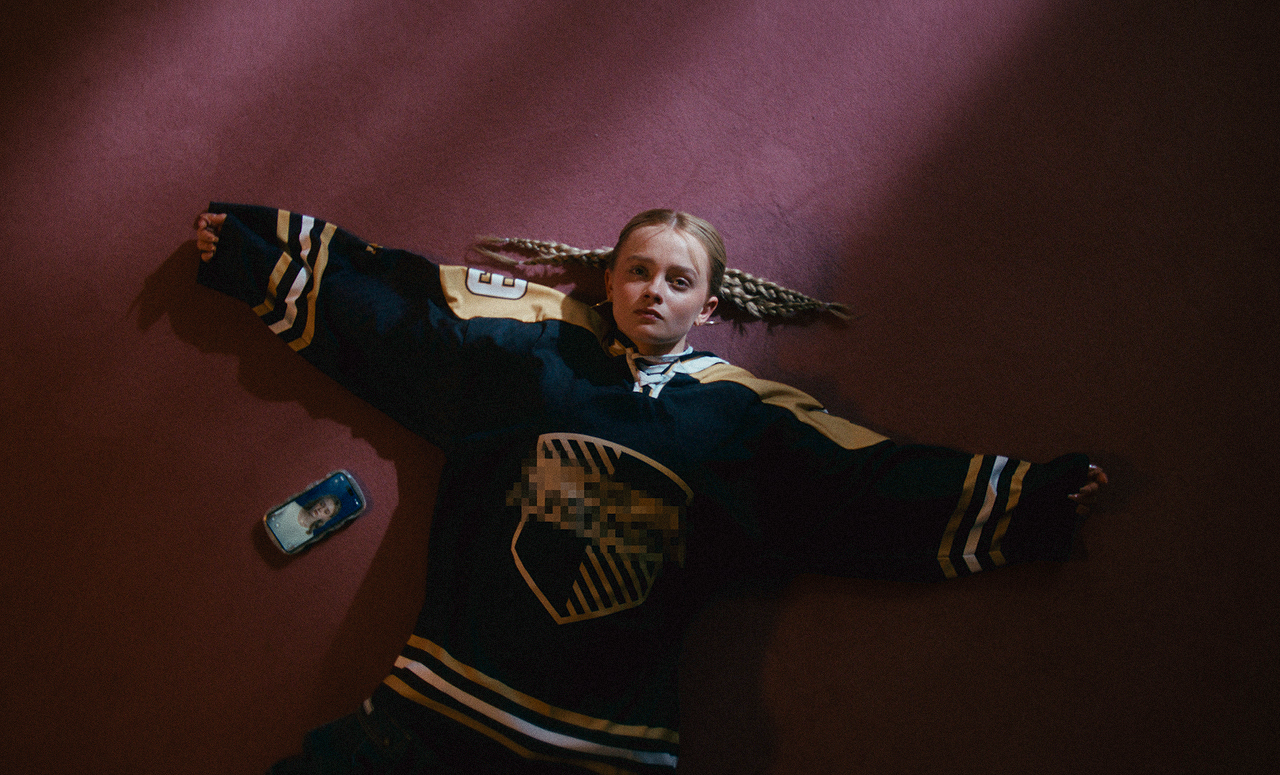
Babystar is slow and quiet; cunningly cutting with its visuals drenched in cool tones and devoid of colour. This contrasts greatly with the snippets of social media posts, warm and inviting, further sanitised by bright and cheerful background music. From the start, the viewer is plunged into the grey, uncanny world that Luca lives in, as they welcome blindfolded children into their whitewashed mansion. These are later revealed to be fans meeting Luca – as seen through the reel posted on what looks to be Instagram. The movie’s jarring back-and-forth between this portrayal of a healthy and happy family and the dark reality of Luca’s neglect, her parents’ disregard for privacy and unhealthy fixation on beauty evokes unease and anxiety.
The use of symmetry and uniformity in the framing of the scenes also furthers this odd sensation; Luca is always positioned in the middle of her parents. It’s bizarrely perfect, supplementing the narrative surrounding her struggle with having a new sibling and no longer being an only child, and also the way her parents are constantly in control of her – her image online, her finances, and even the content she makes, whether she likes it or not. These penetrating graphics and the suspenseful score immerse the audience in Luca’s feelings of suffocation and frustration.
Luca’s struggles with isolation evolve into a polarising
Luca’s struggles with isolation evolve into a polarising dissection of AI. At 16, with no one else to turn to, it’s easy to empathise with Luca’s predicament and her coping mechanisms. But the picture doesn’t shy away from highlighting the damage AI can inflict on young, impressionable minds and those susceptible to loneliness. The flicker of Luca’s robotic avatar into a distorted image of her is a constant reminder that she’s talking to a machine despite the comfort she finds in it, creating a moral struggle for the viewer with their attachment with Luca as they uncomfortably witness her falling deeper into reliance on AI.
While the script is straightforward and minimal, what impresses most is Babystar’s visual storytelling – from the cinematography and editing to the actors’ subtle and nuanced expressions. While Bea Brocks and Liliom Lewald are convincing in their roles as Stella and Chris, it’s Maja Bons as Luca that shines the brightest. Every little twitch of her lips, overly expressive eyes, and the slow transition of her facial features from one emotion to another elevates Joscha Bongard’s work to pure excellence, resulting in a resonant impact with Babystar’s themes.
Strangely riveting, Babystar successfully dissects the horrifying reality of influencer culture and its effect on children born into this lifestyle.
Babystar is released in UK cinemas on 25th September 2026.
Watch the trailer forBabystarhere:
