
Legendary horror author H.P. Lovecraft once wrote that “the oldest and strongest emotion of mankind is fear, and the oldest and strongest kind of fear is fear of the unknown.” Of course, fear is subjective, and some people genuinely freak out at the sight of blood and viscera gushing from helpless victims. But for many, the most unnerving horror comes in restraint, from films that are more selective and meticulous about what they show their audience.
While we have an extensive list of the best horror movies ever, covering everything from the terribly violent to the completely suggestive, we’ve distilled this list down to those movies that notably do away with much of the yucky red stuff. The films here achieve their terror through pure performance, atmosphere, implication, and insinuation, planting an unnerving inkling of fright and dread in audiences that something deeply horrifying could happen at any moment. These movies don’t have a lick of gore, and yet the psychological violence of their scares wounds all the same.
Here are the 10 best horror movies with no blood or gore, ranked.
10. The Haunting
There’s nothing like a classic haunted-house movie to deliver frights with only the slightest suggestion of violence, and Robert Wise’s 1963 film “The Haunting” unnerves purely on tone, mood, and composition. An adaptation of Shirley Jackson’s “The Haunting of Hill House,” it translates Jackson’s gothic unease into a handsomely mounted chiller.
Richard Johnson stars as Dr. John Markway, an anthropologist with a keen interest in the supernatural. For his research, he rents Hill House, an ominous 19th-century New England mansion with a torrid and tragic history, and invites three guests with proclivities toward the paranormal to stay and investigate with him, most notably Eleanor “Nell” Lance (Julie Harris), who is grieving the recent death of her invalid mother and has also experienced poltergeist activity as a child.
With that setup, Wise makes a film that’s effectively spooky and psychologically tense, with stunning production design and striking anamorphic photography from cinematographer David Boulton, using an untested, experimental 30mm wide-angle Panavision lens that perfectly s the audience in Nell’s featured, paranoid state of mind. It’s a ghost story of unrelenting subjectivity, and one of the best haunted-house movies of all time.
9. The Ring
Gore Verbinski not only pulled off the seemingly impossible by adapting a Japanese horror movie for an American context, but “The Ring” has also evolved into a full-blown masterpiece. This retelling of Hideo Nakata’s original “Ringu” translates J-horror’s slow-building dread into a frightening supernatural melodrama for Western audiences and, in doing so, launched a decade of Hollywood mining Japanese horror for
Naomi Watts stars as Rachel Keller, a journalist investigating a cursed videotape that kills its viewers exactly seven days after they watch it, a mystery that pulls her and her young son, Aidan (David Dorfman), toward the story of Samara, a drowned girl whose rage has transformed into a malicious power that travels through CRT television screens and VHS tapes. Verbinski and cinematographer Bojan Bazelli drown the film in a chilly, sodden Pacific Northwest palette of gray skies and steely-blue environments, so even the daylight scenes feel drenched in dread. For as scary as it is, the violence happens almost entirely off-camera or in single, indelible images rather than anything explicit, which is exactly what has helped lodge the iconography of “The Ring” into the permanent psyche of American cultural consciousness.
Critics at the time treated it as a competent genre exercise, but “The Ring” has aged into a distinct meditation on motherhood, inherited trauma, and the way media technology carries contagion into the domestic sphere. Its success was proof that a monster you barely see can be more disturbing than one you do.
8. Paranormal Activity
The “Paranormal Activity” movies may have eventually become so convoluted that we had to write an entire article explaining the timeline, but the first entry is the epitome of lean, mean, simply terrifying horror. Director, writer, editor, cinematographer, set decorator, and costume designer Oren Peli made the film for around $15,000, shooting it largely in his own San Diego home with a cast of two and a single static camera. That constraint became the film’s entire aesthetic philosophy: a tripod planted in a bedroom corner each night, timestamps ticking in the corner, nothing happening until, suddenly, it does. That formula helped make “Paranormal Activity” a worldwide phenomenon.
Katie Featherston and Micah Sloat play a couple, credited under their own first names, whose house is stalked by a presence that escalates from creaking doors to more violent ends. However, the film almost never shows much of anything as blunt as an attacking ghost or monster, let alone much violence or gore. Its horror is instead procedural and cumulative: aAblanket moves an inch; a door swings open a few degrees further each night. It trusts the audience’s imagination to do the work that special effects typically do.
The film also single-handedly revived the found-footage genre over a decade after “The Blair Witch Project,” proving the format’s cheapness wasn’t a limitation but a mode of intimacy, and it spawned a franchise, imitators, and a whole subgenre of “static camera in a haunted house” films that came to define horror in the 2010s. Today, we still feel the eerie tendrils of “Paranormal Activity” in our horror movies.
7. The Others
Alejandro Amenábar’s 2001 gothic ghost story strands Nicole Kidman’s Grace Stewart in a fog-choked Jersey mansion just after World War II, raising two children with a rare photosensitivity that requires every curtain drawn and every door locked before the next is opened — maybe the greatest excuse for a big mansion being permanently dark and isolating in any horror movie ever. When new servants arrive and strange presences make themselves known, Grace’s religious rigidity and mounting terror turn into something more like persecution, both of her household and of herself.
Like “The Haunting” earlier on the list, Amenábar builds a horror movie out of repression and psychological fracturing, with Kidman’s isolation contributing to the suffocating atmosphere. That comes through in Amenábar’s direction as well, building the film almost entirely out of candlelight and the anxious choreography of moving through a house whose full geography the viewer can never quite grasp. There is no blood here, only atmosphere and Kidman’s brittle, controlled performance.
The film’s late reveal is one of the horror genre’s great recontextualizations, turning a haunted-house picture into a study of guilt, denial, and the horror of being adrift. “The Others” holds its own as a mournful piece of gothic craftsmanship, less interested in the shock of its twist than in the sorrow that defines it, and it remains one of the most purely atmospheric ghost stories of its era — even so, it finds time for some truly scary scenes.
6. The Conjuring
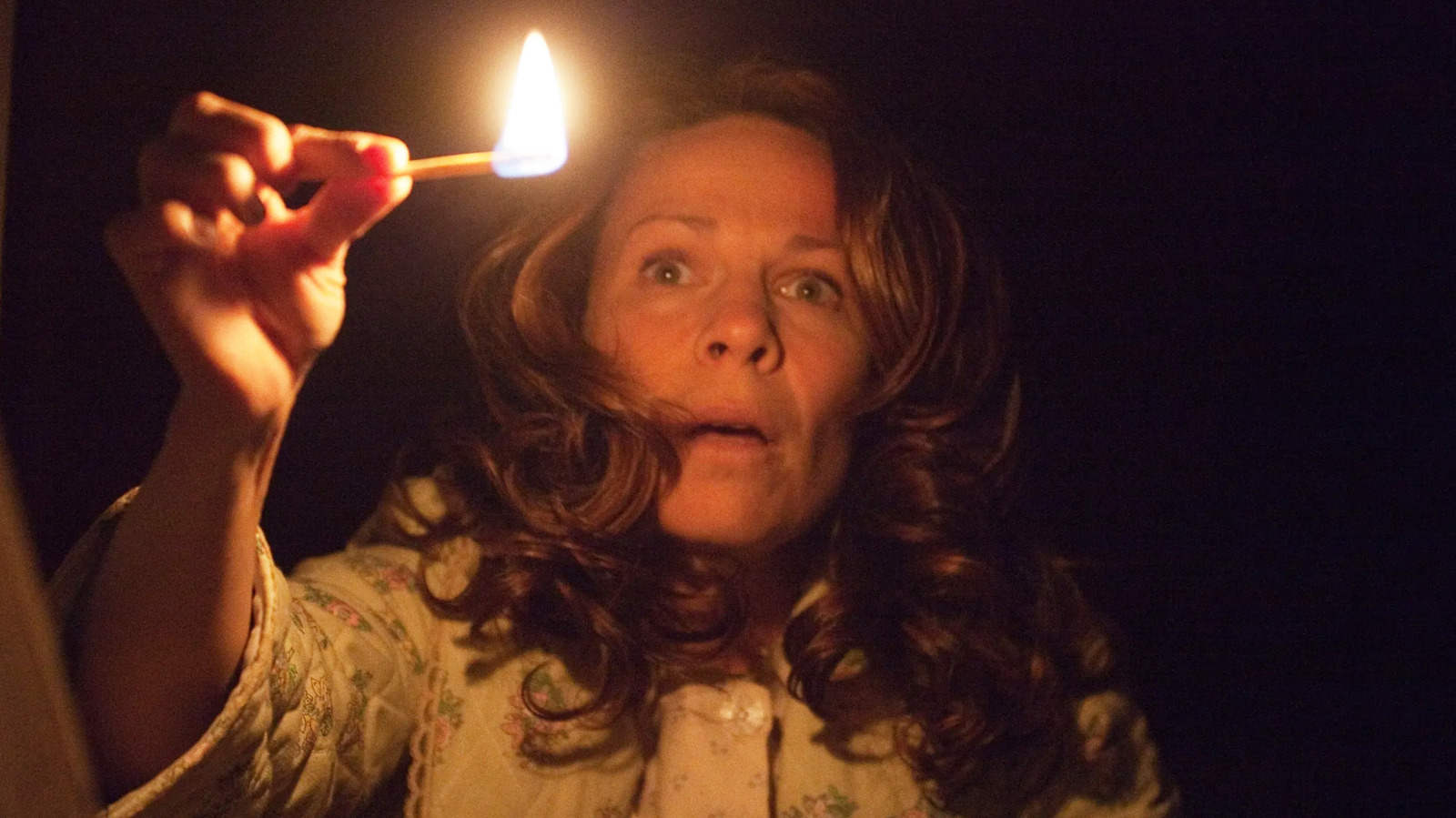
“The Conjuring” series may have reached a point where we deemed it necessary to rank all 10 entries, but the first film is a masterclass in stand-alone, purely scary modern horror filmmaking. James Wan’s 2013 film marked a return to classical horror craftsmanship, and he delivers with deep-focus compositions and patient camera moves in service of old-fashioned, bump-in-the-night scares. Ed and Lorraine Warren (Patrick Wilson and Vera Farmiga), the real-life horror investigators whose dubious case files have inspired decades of equally dubious horror productions, arrive at the Perron family’s Rhode Island farmhouse in 1971 to confront a malevolent presence terrorizing Carolyn Perron (Lili Taylor), along with her husband and five daughters.
Wan, working from a screenplay by brothers Chad and Carey Hayes, builds tension through blocking and sound design rather than gore, staging his set pieces with the clean rigor of a filmmaker who understands that all the dread of great horror lives entirely in anticipation. The film’s insistence on being “based on a true story” is plainly fantasy, and it rehabilitates the reputation of a couple who were, by all accounts, true-blue hucksters, but that hasn’t denied the film any of its cultural traction.
Its success reshaped the horror marketplace, spawning an entire “Conjuring” Universe of spin-offs and prequels that now ranks among the highest-grossing horror franchises ever assembled. But for all its commercial sprawl, the original still functions as a disciplined haunted-house film and a throwback to ’70s and ’80s genre filmmaking that trusts the power of a slow push-in to terrify audiences.
5. Rosemary’s Baby
Roman Polanski’s first American film, adapted from Ira Levin’s novel, turns pregnancy into a site of horror. Mia Farrow plays Rosemary Woodhouse, who moves her ambitious, underemployed actor husband (John Cassavetes) into Manhattan’s Bramford building, only to find their eccentric elderly neighbors, Minnie and Roman Vastevet (Ruth Gordon and Sidney Blackmer), taking an unsettling interest in her health once she becomes pregnant.
Polanski shoots the film as creeping paranoia rather than shock, keeping Rosemary perpetually uncertain whether she’s being poisoned by a satanic cult or simply losing her grip, her isolation heightened by a world of men who dismiss her instincts about her own body. Yet the film’s slow, steady oozing of dread never resorts to visible violence to unsettle — it’s all mood and performance, including a stunningly needling, overbearing performance from Gordon, who won the Supporting Actress Oscar.
Its themes of bodily autonomy and institutional gaslighting have only grown more astute with time, and the film’s release was shadowed by a web of real-life horror: the Manson Family’s murder of Polanski’s wife, Sharon Tate, came less than a year later, and Polanski’s own later-revealed real-world crimes would further sharpen the thorny edges of the film he wrote and directed himself. Even so, it’s a foundational piece of paranoid horror that rests on the terror of womanhood and of not being believed.
4. The Innocents
Jack Clayton’s 1961 adaptation of Henry James’s “The Turn of the Screw” is a masterclass in ambiguity, dressed up as a ghost story. Deborah Kerr plays Miss Giddens, a sheltered governess hired to look after two orphaned children at a remote country estate, who becomes convinced that the ghosts of two former servants are possessing her young charges. Whether the spirits are real or whether Miss Giddens’s own repressed desires and fraying sanity conjure them is the question the film builds its anxieties around.
Of all the films on this list about the paranoia of women with repressed desires and angst, “The Innocents” is the ultimate archetype. Indeed, 60 years later, it remains one of the scariest films ever made. Its atmosphere is unshakable: cinematographer Freddie Francis shoots in deep-focus black-and-white CinemaScope, letting candlelight pool and shadows stretch across the frame so even empty rooms feel occupied by an unassailable presence. Truman Capote co-wrote the screenplay, sharpening the story’s undercurrents of sexual anxiety and Victorian repression. There’s no violence to speak of, just the slow-burning unease of a governess’s tightening grip on children who may or may not need saving from her.
Contemporary critics admired the film’s restraint, but its reputation has deepened with each generation of filmmakers who’ve cited it as a touchstone — Kubrick’s “The Shining” and countless prestige ghost stories owe it a clear debt. “The Innocents” endures as one of horror’s great studies in unreliable subjectivity and as a film that recognizes how much disquiet and dread an eerie hallway lit by candlelight can contribute.
3. Halloween (1978)
Compass International Pictures
John Carpenter made “Halloween” for around $300,000 in 1978 and, in the process, invented the modern slasher template. Michael Myers (Nick Castle), institutionalized as a child for murdering his sister, escapes Smith’s Grove Sanatorium and returns to Haddonfield, Illinois, to stalk babysitter Laurie Strode, played by Jamie Lee Curtis in a performance that established the “final girl” as horror’s defining archetype. Donald Pleasence, as Dr. Loomis, offers the film’s closest answer to Michael’s seemingly unstoppable power, describing him as “purely and simply evil.”
That’s what continues to get under the skin of audiences, whether they’re experiencing “Halloween” for the first time or revisiting its pleasures and horrors after dozens of watches. Michael has a threatening mystery to him, and seeing him playfully framed amid the quaint suburban streets of Haddonfield (actually South Pasadena standing in for Illinois) taps into something recognizable and primal about the furtive dangers lurking in the crevices of sheltered, everyday suburbia. The violence, when it arrives, is comparatively spare and unbloody, and what lingers is Michael himself and Carpenter’s use of empty suburban space.
Its success spawned an entire industry of slasher sequels and imitators throughout the ’80s, few of which matched its formal discipline. Decades on, “Halloween” is still regularly cited as the genre’s most influential entry for building a film entirely on the dread of someone standing very still across the street, intent on harm. It’s one of the very best horror films ever made, but maybe Carpenter’s idea to send Michael to space could have surpassed it?
2. Psycho
One of my favorite bits of movie history concerns Alfred Hitchcock’s strict rules for audience behavior at the release of “Psycho.” In an era when it was common for people to stumble into movie theaters at any time, and movies were often made to accommodate that fact, the surprising developments of “Psycho” meant that no one was admitted after a show had started, emphasizing the essential nature of experiencing the full story he wanted to tell.
The famous mid-movie plot twist helped make “Psycho” one of the most famous and influential horror movies ever made, thanks to its sudden focus on the ominous Bates Motel and its anxious, birdlike proprietor, Norman Bates (Anthony Perkins), whose devotion to his domineering mother conceals something far more unsettling. Shot in black-and-white, partly for budgetary reasons and partly, by Hitchcock’s own account, to keep the violence from becoming unpalatably red, the film’s shocks are almost entirely psychological.
Adapted from Robert Bloch’s novel, itself loosely inspired by killer Ed Gein, “Psycho” relocated horror from the external monster to the domestic and personal, turning a motel bathroom into the site of one of horror’s most evocative and famous sequences. Its influence on the slasher genre that followed is direct and well documented, but the film itself transcends any diminutive labels one could attach to it. It’s one of the cleverest and most unsettling movies ever made.
1. The Blair Witch Project
The entire proto-virality of “The Blair Witch Project” was partially based in how little it shows you. Disregard the fact that the film is absent of any blood or gore, Daniel Myrick’s and Eduardo Sánchez’s found footage sensation refuses to show its audience anything that would traditionally be considered “horrifying” at all. The directors shot the film for roughly $60,000 on consumer-grade 16mm and Hi8 video, handing their three actors cameras and a loose scenario that sent them into the woods shooting a faux-documentary about a supposed local urban legend concerning a malevolent spirit called the Blair Witch. It was sold to its audience as true recovered footage from a lost group of amateur filmmakers, aided by an early viral website and initial IMDb listings that identified the cast as missing.
That fabricated reality is the genius of “The Blair Witch Project,” and its sense of realism and tactility is how it gets away with never showing off any antagonist. Instead the film shows off more ominous tokens of potential malice: stick figures bound with twine, piles of stones, voices yelping out in the dark, and, mostly, the slowly accumulating disorientation of three people losing the thread of where they are, who’s still in charge, and whether or not they’ll make it back home.
Made for a fraction of a studio budget, the movie was a nightmare to film, but it grossed nearly a quarter-billion dollars worldwide and became a case study in internet-era marketing as much as horror filmmaking. It revived and helped codify found-footage horror as ad down to modern day forms of the sub-genre. They’re all chasing what “The Blair Witch Project” accomplished: the staggering, gut-wrenching tension of horror unseen
