

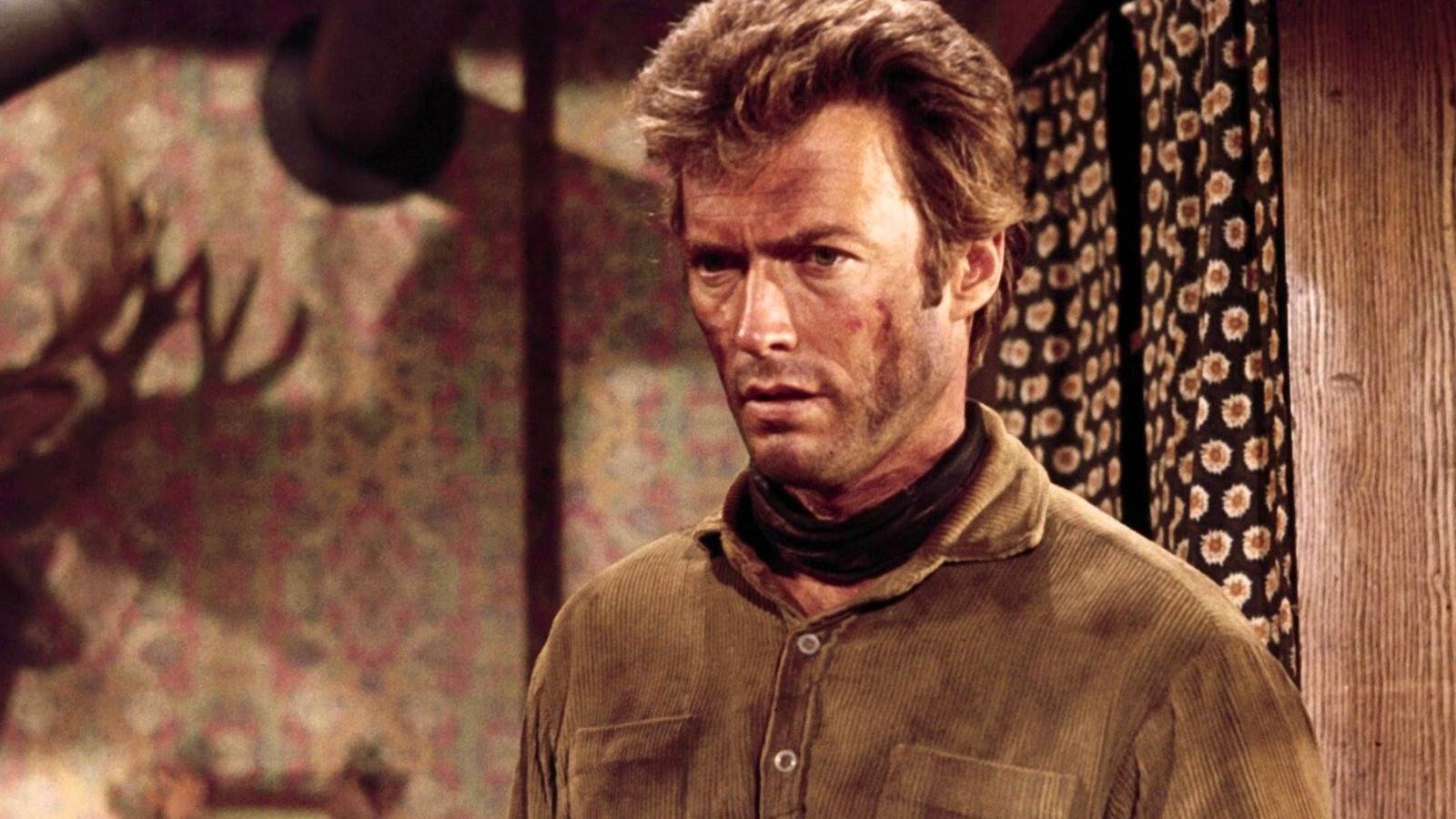
Winter is fast approaching, as is the holiday season. It’s the perfect time to cozy up with a classic Western. Prime Video has you covered, because one of the most pivotal movies in Clint Eastwood‘s career is headed to streaming next month. And it isn’t just a historical curiosity: it’s a rip-roaring saga of revenge.
In the mid 1960s, Eastwood was a Western TV star, thanks to his role as Rowdy Yates on the popular series Rawhide. However, his ventures into movie-making had left him frustrated. That changed when Italian director Sergio Leone cast him in A Fistful of Dollars; that “spaghetti Western” and its two sequels made Eastwood an international star, and cemented him as an icon of the silver screen. Hollywood had noticed, as well, and wanted him to headline a new movie that incorporated elements of Leone’s films into a conventional American Western. Eastwood accepted, but with the caveat that he would be a producer on the film, courtesy of his newly established production company, The Malpaso Company.
That movie was Hang ‘Em High, which was directed by Ted Post; Eastwood knew him from his Rawhidedays. Eastwood starred as Jed Cooper, a retired lawman who’s assaulted and lynched by a posse (including a young Bruce Dern) over a misunderstanding. Rescued by US Marshal Dave Bliss (Ben Johnson, The Last Picture Show), Cooper is summoned to the headquarters of Judge Adam Fenton (Pat Hingle, Batman). Fenton warns Cooper not to take revenge, but instead hires him as a Marshal and orders him to bring the men in alive if possible. Soon, Cooper is hunting his would-be executioners down, accompanied by Rachel Warren (Inger Stevens, Madigan), a woman who’s seeking vengeance of her own.
Collider Exclusive · 8 Questions · 2 MinutesWhich
Collider Exclusive · 8 Questions · 2 MinutesWhich Western Icon Are You Most Like?No Name · Doc Holliday · Wyatt Earp · Mattie RossPick your name, your gun, your horse and how you spend a night in town, and we will tell you which legend of the Old West you would have been. Four icons are waiting at the end of this: the stranger who never gives his name, the gambler who would die for a friend, the lawman who never wanted the badge, and the girl nobody has ever talked out of anything.
🚬No Name(Dollars Trilogy)
🃏Doc Holliday(Tombstone)
⭐Wyatt Earp(Tombstone)
🐎Mattie Ross(True Grit)
FIND YOUR ICON →
01
The town is about to learn your name. What do they call you?In a Western, what people call you is already half the character.
AThey never do find it out, so the stranger will have to do.
BA nickname I picked up at a card table and never shook off.
CMarshal, and most people say it with a bit of respect.
DMy full name, and I will correct anybody who tries to shorten it.
02
What are you carrying?Everything out here is character, right down to what is sitting on your hip.
AOne revolver I have had for years and have never once talked about.
BA pistol, a knife and a deck of cards, and the cards do most of the damage.
CA shotgun, because it tends to end arguments rather than start them.
DMy father’s gun, which is far too big for me, and I am carrying it anyway.
03
What are you riding?A hero and their horse is one of the oldest relationships in cinema.
ASomething plain that nobody in town would look at twice.
BWhatever I won last night, which may not be strictly mine yet.
CA big steady horse that will not spook when things get loud.
DA pony I overpaid for and named myself, and I will hear nothing against him.
04
You have got one evening in town. How does it go?The saloon is where these films quietly tell you who somebody really is.
AOne drink at the far end of the bar with my back to the wall.
BAt the card table, holding court, up forty dollars and climbing.
CA quick drink, then a walk round town to see that everything is quiet.
DUpstairs with the ledger, working out exactly what tomorrow is going to cost.
05
A stranger offers you money for a job that sounds like trouble.Somebody always turns up with a full purse and a bad idea.
AI ask how much, and then I ask for a good deal more than that.
BI say yes before he has finished, mostly because it sounds like a story.
CI ask him who gets hurt if I turn him down.
DI ask for the terms in writing before anybody shakes on anything.
06
Somebody is waiting for you in the street. What does the town see?Two people, an empty road, and everybody else watching from behind the shutters.
ASomebody walking out very slowly who has not said a single word.
BSomebody grinning, which everyone watching finds deeply unnerving.
CSomebody making one last attempt to talk the other man down.
DSomebody far too young to be out there, walking out regardless.
07
What is the one thing you will not do out here?The code is about the only thing west of the river that actually holds.
AExplain myself to somebody who has not earned an explanation.
BRide off and leave a friend standing out there on his own.
CLet a whole town pay for a fight it had nothing to do with.
DLet a grown man tell me I am too young to be standing here.
08
The job is finished. Where does the story leave you?Eight questions in, this is the one that decides your icon.
AOn a ridge somewhere, riding away, without saying goodbye to anybody.
BSomewhere warm and worn out, having enjoyed very nearly all of it.
CHome, with the badge on the table and the whole thing behind me.
DOlder, changed by it, and telling this story for the rest of my life.
The Dust Has SettledYour Western Icon Is…
Four icons and four completely different ways of walking into trouble.
This is the one you would have been out there, why it fits, and what it would have cost you.
The Dollars Trilogy · 1964–1966
The Man With No Name
You have never explained yourself and you have never needed to,
because people work out fairly quickly that you are the most capable person in the room
without you ever having to mention it.
- Eastwood built the character out of everything he refused to do, stripping away the
backstory, the speeches and every bit of reassurance until only the competence was left. - You keep your own counsel, and while other people occasionally find that unnerving, you
have never felt any real need to fix it for them. - The Dollars films work because he genuinely is in it for himself right up until the
moment he is not, and he never explains that part either. - You would be gone before anybody got a chance to thank you.
Doc Holliday · Tombstone · 1993
Doc Holliday
You are the funniest person in most rooms
You are the funniest person in most rooms and the most loyal
person in all of them, and you would be genuinely insulted if somebody suggested those two
things were in any tension.
- Doc has no real reason to be in this fight beyond the fact that his friend is in it,
which is the only reason he has ever needed for anything. - You lead with wit, and it does a very effective job of hiding how seriously you take the
handful of people you actually care about. - Val Kilmer’s performance is the most quoted in the entire genre because the jokes keep
getting sharper as the situation gets worse. - You would spend everything you had on this and still describe it as a good week.
Wyatt Earp · Tombstone · 1993
Wyatt Earp
You never wanted this job, and you took it anyway because the
alternative was standing there watching somebody less careful do it badly, which is the most
Western reason there has ever been.
- Earp is the reluctant authority figure, a man who came to town specifically to be left
alone and somehow ended up answerable for all of it. - You are protective by instinct, so when something goes wrong your first thought is who
is exposed rather than who is to blame. - These films understand that keeping order costs far more than breaking it, and that the
person holding the line almost never gets thanked. - You would do the whole thing again, and you would complain about it the entire time.
Mattie Ross · True Grit · 1969 & 2010
Mattie Ross
Nobody has ever successfully talked you out of something you had
already decided was right, and a long line of grown adults has found that out the hard way.
- Mattie is the most relentless character in the Western canon and she manages it through
argument, paperwork and flat refusal rather than a fast draw. - You have no patience for being managed, so you negotiate, you check the details and you
turn up exactly when you said you would. - True Grit is the rare Western where the moral centre is the youngest person on screen
and every adult around her has to catch up. - You would get what you came for, and the film is honest about what that takes out of
you.
Was ‘Hang ‘Em High’ a Success?
Upon its release in the summer of 1968,
Upon its release in the summer of 1968, Hollywood soon learned that Eastwood’s international stardom translated to American box office success. The movie became United Artists’ biggest success ever, even surpassing the Sean Connery James Bond movies it had released earlier in the decade. It also scored with critics; it has a 93% Fresh rating on Rotten Tomatoes. The movie was a stepping stone to success for Eastwood; he’d follow it up with Coogan’s Bluff, a contemporary crime thriller that introduced him to longtime collaborator Don Siegel. The Malpaso Company would also set Eastwood up to make his directorial debut with the 1971 thriller Play Misty For Me.
Hang ‘Em High will stream on Prime Video starting on December 1. Stay tuned to Collider for future updates.
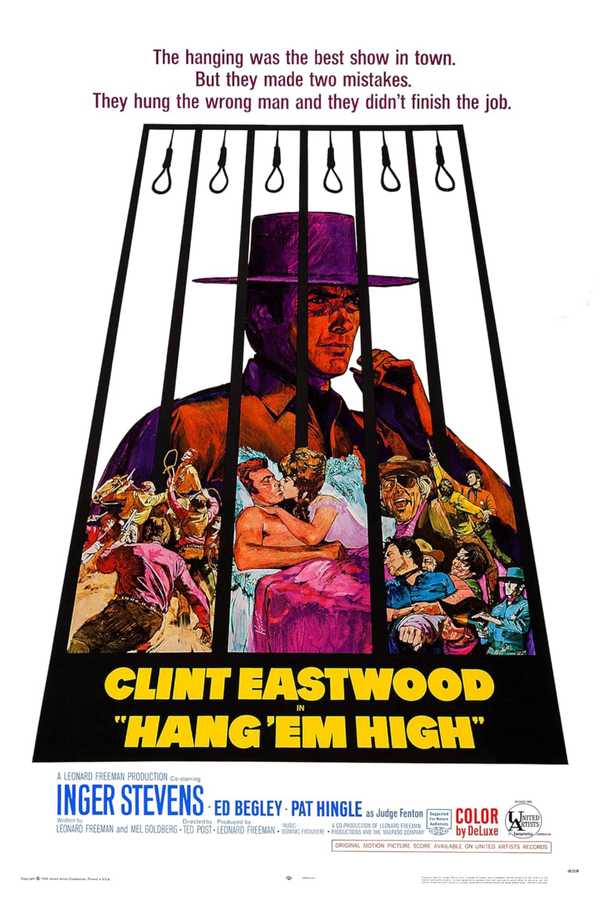
PG-13
Western
Drama
Release Date
July 31, 1968
Runtime
114 Minutes
Director
Ted Post

Clint Eastwood
Marshal Jed Cooper
Inger Stevens
Rachel Warren- Ed Begley
Captain Wilson - Pat Hingle
Judge Adam Fenton
Writers
Leonard Freeman, Mel Goldberg
